Can I Use Solar Power to Charge My EV?
In short, yes you can.
But it’s not always going to be ideal, or even possible, so we’ll take a look at the advantages and pitfalls in this blog.
What Equipment You Need to Charge an EV With Solar Power
First and foremost, you’re going to need that full solar energy system!
And, if you are not familiar with solar energy here are the basics:
Solar Panels
These are large, flat panels that are usually placed on the roof and are made up of silicon cells that convert daylight into electricity.
The daylight ‘jiggles’ the molecules inside the silicon cells and that is how they create electricity.
The electricity is then taken from the panels via copper cables.
Inverter
The power that comes from your solar panels is DC energy, most of the electrical items in your home will use AC energy.
The inverter will convert the DC to AC so it can be distributed around the house.
CT Clamp
This is a device that monitors the electricity leaving and entering the system.
It is also there as a safety measure to shut the solar system down in the event of a power cut.
This may seem counter productive but the system can’t be exporting power if people are out working on the grid as it could electrocute them.
Battery Storage
You don’t need this, but if you are fitting a solar system, we would always suggest you install them as it means you can collect your excess energy and use it whenever it’s needed.
Can Standard Home Solar Panels Handle EV Charging?
Yes, of course they can.
The solar panels are just another ‘input’ to your home’s energy system.
All of the electricity that comes into the home is the same kind of energy, thanks to the inverter.
The problem is the amount of energy your EV needs compared to the amount of energy your panels are kicking out – and also the time of day.
We generally charge our EVs over night as that’s when they are just sitting out on the drive, and it’s also when most suppliers offer the lowest rates.
How Solar EV Charging Works
The domestic EV chargers most companies, and we include UK Energi in that, have a CT clamp fitted that monitors the energy coming in and out of your home.
Under normal circumstances the EV charger will check for any energy that is being exported to the grid and redirect it to your EV.
There are obvious ways to override that feature but it’s always better to use the electricity you are producing than send it to the grid, you are unlikely to be paid as much for your export as you pay for import.
How Much Solar Power Does an EV Actually Use?
Here’s the rub when it comes to charging your car from solar panels.
The average car battery in the UK stores between 40 and 60 kWh – which is a lot of energy.
The average solar energy system in the UK will pump out between 8 and 12 kW a day – so you can already see the maths isn’t mathing.
That said, you are unlikely to be trying yto charge your EV to full capacity during the day, so a little, free top up every now an then may be just what you are looking for.
Charging Your EV With Solar Panels vs. the Grid
We won’t beat around the bush here, you’re going to do the bulk of your EV charging from the grid – most likely overnight.
Unless you set up a solar energy system exclusively for your EV, and don’t use any power for the home or for storage, you’re only going to be able to charge your EV to about 40%, and even then you’d have to do it during the day in summer.
That said, you are still going to save money as you can trickle charge during the day and take advantage of exclusive energy rates in the evenings.
Costs and Savings of Charging an EV With Solar Energy
Having a domestic EV charger is going to save you money, regardless of whether you have a solar energy system or not.
Charging at a service station, supermarket or municipal car park will cost you around 70p per kWh.
Charging at home will cost you, at the most, 26p and, at the least, about 7p.
So you will save money.
If you do have a solar energy system there is trickle charging, cheap night rates and also the ability to steal stored power from your domestic batteries.
Another way to ‘save’ is by selling the energy in the EV battery back to the grid at peak times – but only a few energy suppliers will allow that.
Do You Need a Battery Storage System for Solar EV Charging?
No, you don’t.
It would be unusual to use the power from your batteries to charge your EV as it’s merely moving power from one storge system to another.
You could do it you were desperate to get some charge onto your EV, but it would take a while to charge and then you’d have to buy energy from the grid.
Best EV Chargers for Solar-Powered Homes
This is a debateable issue for sure!
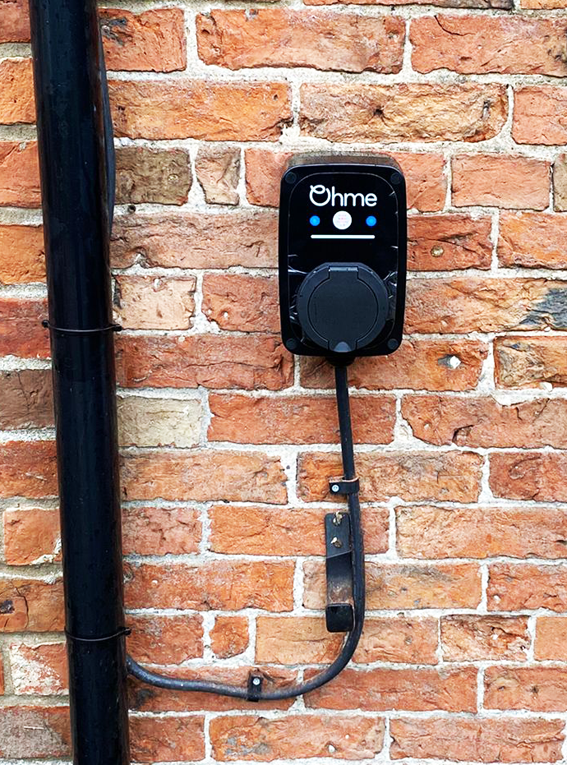
But we would say companies like MyEnergi and Ohme are up there with all the greats.
They have all the features you need, they are neat and they just work very well.
We’d also suggest you get a ‘tethered’ version, which just means it comes supplied with the cable that goes from the charger to the car.
It can be a faff if you try to use the one that came with your car.
Environmental Benefits of Solar EV Charging
At the risk of sounding obvious, if you have a solar system and an EV you are reducing your carbon footprint by quite a considerable amount.
There are lots of scare stores about both EVs (batteries) and solar but, as with many things, they are amplified by people who have an agenda.
Solar batteries and EV batteries are very safe, that don’t just combust a whim. It is, in fact, almost impossible to get an EV battery to ignite these days, such are the safety features they have.
So, at the end of the day, if you aren’t using fossil fuels to power your home, or your car, then you are doing a great thing environmentally.
Is Solar EV Charging Worth It for Your Home?
Yes, solar EV charging is definitely worth it.
You will save yourself a fortune on your day-to-day electricity bills with a similar system, you’ll know a few quid off the charging of your car and you’ll be burning less fossil fuels in your everyday life.