Mounting Systems For Solar Panels
We are all used to seeing solar panels mounted on people’s roofs, and in long rows in fields, but do you know the many different mounting systems?
Well, in this blog we are going shed a bit of light on the different ways you can fit solar panels in the home.
On Roof-Mounted Solar Panels
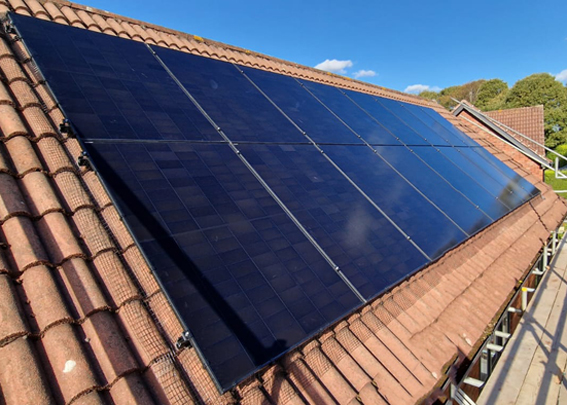
By far the most popular way to mount panels in the UK is the on-roof rail systems.
They are simple, effective and safe - so if it’s not broken, it doesn’t need fixing.
The mounts are installed by sliding a tile up to expose the roof struts and attaching a specially designed hook.
Once the tiles are slid back into place, the hook element stands proud of the roof.
The hooks are fitted along the roof in a straight line, and a rail is placed on top of them to create a secure mounting for the panels.
The panels lay flat across 2 of these rails, a rail at the bottom and one at the top, then secured in place with the appropriate fittings.
While that is a very simple explanation, and may make the system seem flimsy, these things are tested in winds up to hurricane strength and, if fitted correctly, they don’t move for decades.
In Roof Mounted Solar Panels
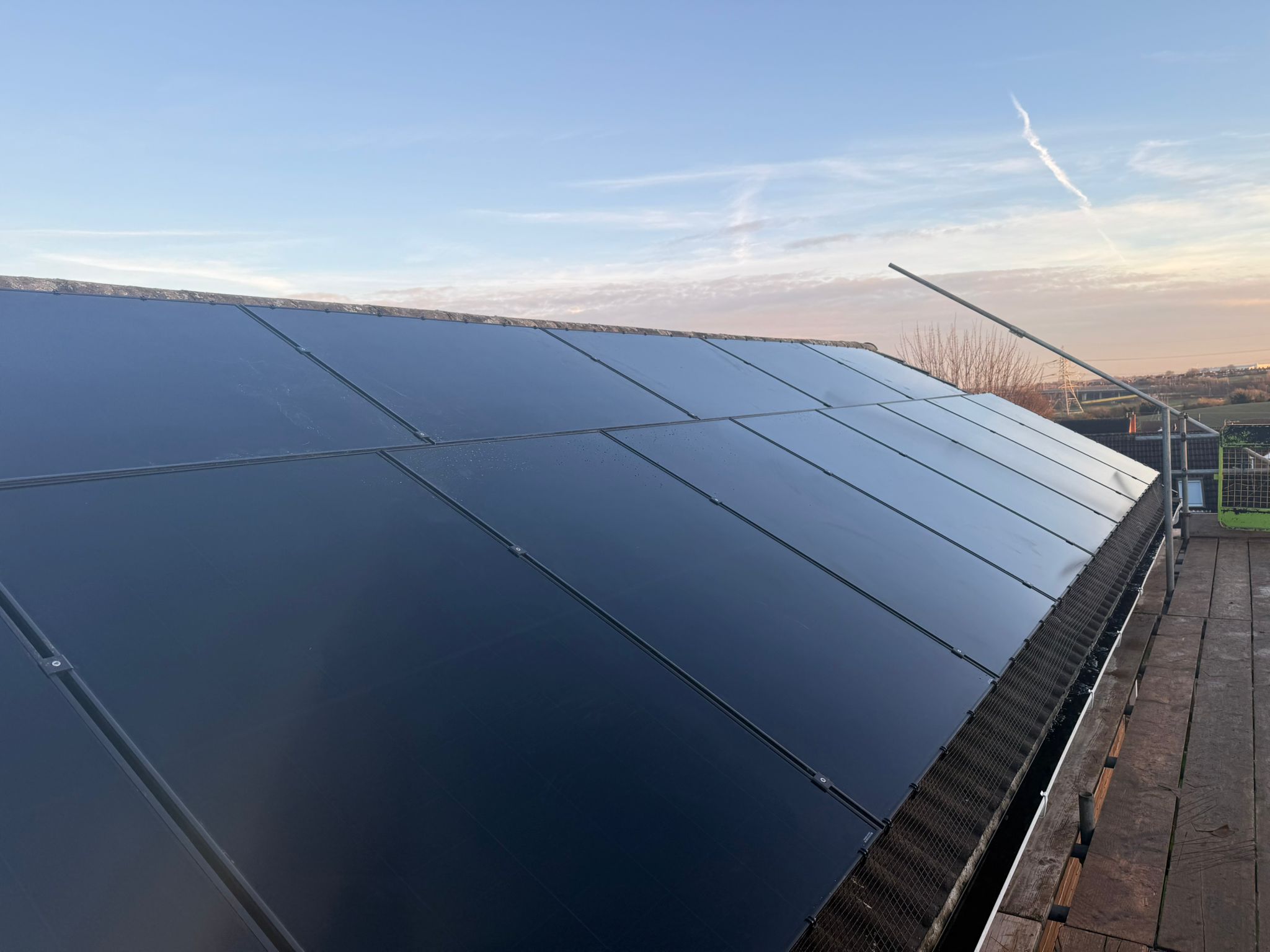
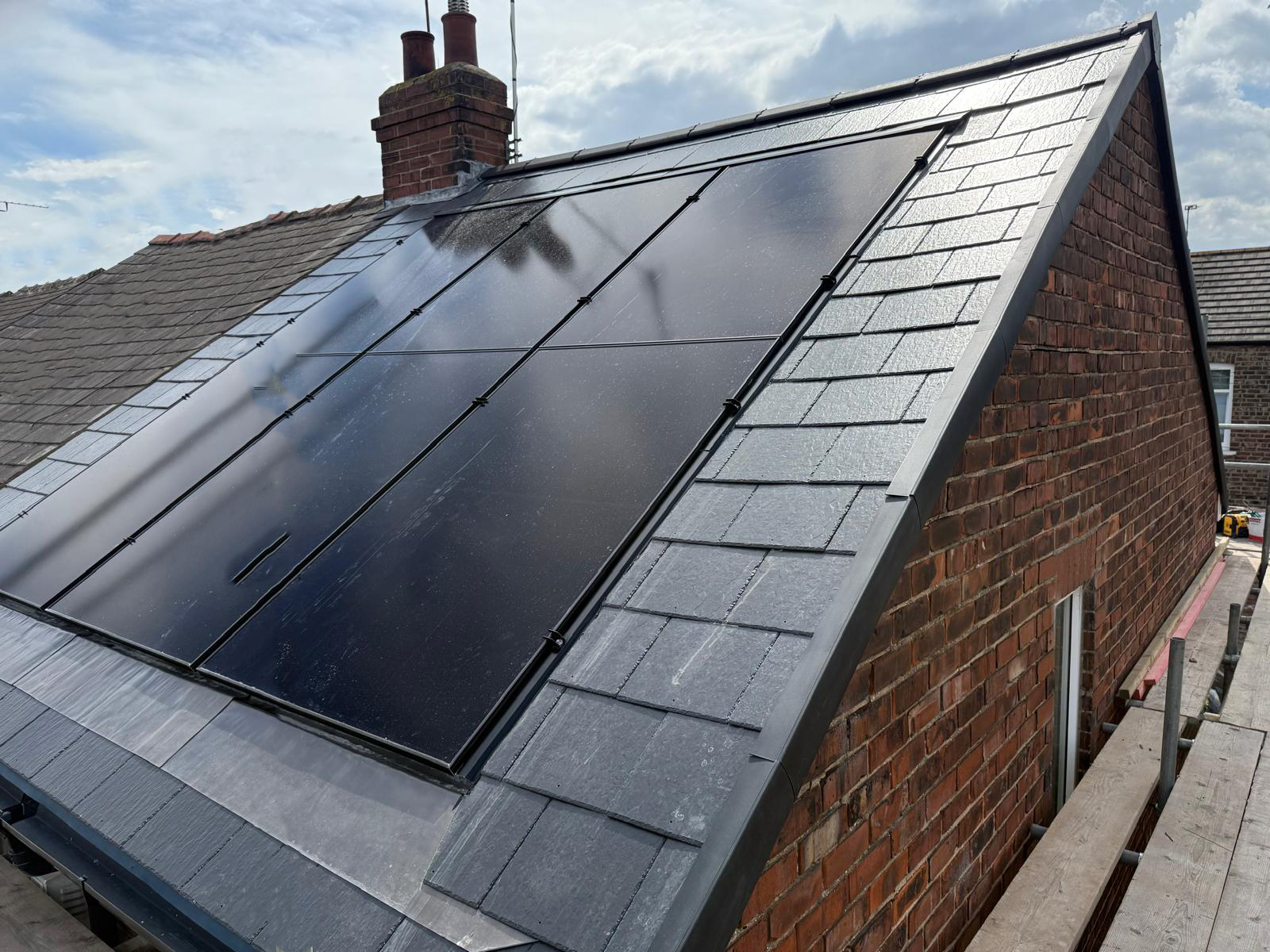
Not everyone is keen on panels standing proud from their roofs, so the In-Roof systems are design to sit the panels flush with your tiles.
In-roof systems are generally used on new build properties or if you are having your roof replaced – as it requires attaching the fittings directly to the roof lats.
Once the felt and lats are fitted to the roof, the solar panel trays are attached to the lats wherever they need to be.
Once all the trays and the panels sitting on them are fitted, the flashing is attached to keep everything waterproof.
The roofer will then fit tiles in the roof as normal so they surround the solar panels.
Ground-Mounted Solar Panels
Now, ground mounted panels are the ones that you’ll see in fields across the world as part of solar farms.
But, if you have the room, it’s certainly something you can do in your own garden.
Much like the on-roof systems, the mounting is achieved using a rail system.
Piles are driven into the ground and fixed with supporting struts, with the front set placed lower than the rear.
The rails are then mounted horizontally across both sets of struts so the panels can be laid at an angle on top of them.
These systems are easy to fit as they require no scaffolding or tile removal.
However, if your panels are mounted on the floor they are more likely to experience shading from buildings and foliage.
Pole-Mounted Solar Panel Systems Explained
Not something we often see in people’s homes, but you will see them at the side of the road at the top of traffic lights!
Pole mounting in generally used for smaller arrays or singles panels.
The panel itself is fitted with a series of brackets so it can be mounted to the pole.
This method is very space effective, so it’s used when the floor space needs to be kept clear.
Flat Roof Solar Mounting Solutions
Tubs!
No, I’m not insulting people, panels are mounted on flat roofs using a system called solar tubs.
These are like rectangular plastic boxes, with one side lower than the other.
The tubs are placed on the roof where the panels need to sit and then filled with ballast in form of sand or stones.
The panels are then laid across the top of the tub and fixed to the edge using the appropriate fixings.
Wall-Mounted Solar Panels
You won’t see many of these around as they are pretty cumbersome and not always practical.
Solar panels need to be at a specific angle to the sun, so they need to be mounted on the wall at an angle.
You can have them flat to the wall, but they will be less efficient.
They are fitted by attaching brackets to the panel and then mounting that to the wall.
Wall mounted solar is, once again, subject to shading from other buildings and foliage.
Tracking Solar Panel Mounts
These are cutting edge systems.
Usually found in high-end solar farms, we are starting to see domestic version hitting the market.
They are basically similar to ground mounted systems with the added advantage of being able to track the sun!
Obviously, this means they are more than a few rails and some fittings.
They have moving parts, motors and advanced software to ensure your panels soak up every second of sun.
We can’t tell you a specific method of mounting or connection because they are all different – but we can tell you they are pretty expensive.
Choosing the Best Solar Panel Mounting Method for Your Property
This very much depends on your property, so your consultant will advise you.
The truth is, you will most likely be fitting an on-roof or in-roof system if you live in a standard home.
Ground mounts and flat roofs are also very popular in domestic installations, but they are usually used to add capacity to your main roof panels.