Top 10 Air Source Heat Pumps Myths – SMASHED!
How do you know when any kind of renewable technology is becoming popular?
The media suddenly becomes full of misinformation and horror stories about that kind of technology!
That’s exactly what’s happening with air source heat pumps right now, so we’ve decided to bust a few ASHP myths that are current doing the rounds.
Air Source Heat Pumps Don’t Work in Cold Weather
Norway has more air source heat pumps, per capita, than any other country in Europe – so that alone should scotch this particular myth.
But, there are people in the media who will still insist that ASHPs need warm weather to work.
So, here are the facts.
An air source heat pump will happily extract heat from outside air at temperatures as low as -15°C to -20°C.
An ASHP has a built in antifreeze cycle that keeps al the liquid flowing, while the tech inside manages to convert the air outside into flow temperatures between 35°C and 55°C for your heating.
ASHPs Are Too Expensive to Run
This just isn’t true, but we can see why this myth has started.
Most combi boilers in the UK run on gas, gas is 3 times cheaper than electricity so, on the face of it gas boilers are cheaper to run.
BUT, air source heat pumps are 3 to 4 times more efficient than gas boilers so they actually cost the same amount to run.
This is one of the reasons why a lot of people who install heat pumps also install solar – because when you are producing the electricity for free, ASHP become the ultimate in efficient home heating.
You Need Underfloor Heating for an ASHP
You absolutely don’t, you can run an ASHP perfectly well with radiators in the average UK home.
That said, underfloor heating is a bonus, and not just with an air source heat pump, with any kind of central heating system.
Underfloor heating tended to be done with electric wiring in the past and worked like any other electric heater, but it was expensive to run and hard to maintain.
However, it is now generally done with water-filled pipes, turning your whole floor into one big radiator.
This is an advantage when using air source heat pumps as they work at a lower temperature and are much more efficient if the area they are heating is quite large.
So, bigger radiators and underfloor heating are the perfect solution – but normal radiators work just fine.
They Can’t Heat Your Home Properly
Tell that to the Norwegians!
If air source heat pumps didn’t heat people’s homes, then no one would buy them!
That seems such an obvious thing to say but it’s absolutely true.
This ‘myth’ isn’t totally wrong though, because there are plenty of heat pumps installed by companies who don’t do their due diligence.
There is no such thing as a truly ‘average’ home, so any installer who is fitting and air source heat pumps should do a full heat loss calculation, along with some other tests, and specify an ASHP that fits your specific home.
If you have the correct ASHP for your home, then it will hit it very wall for decades.
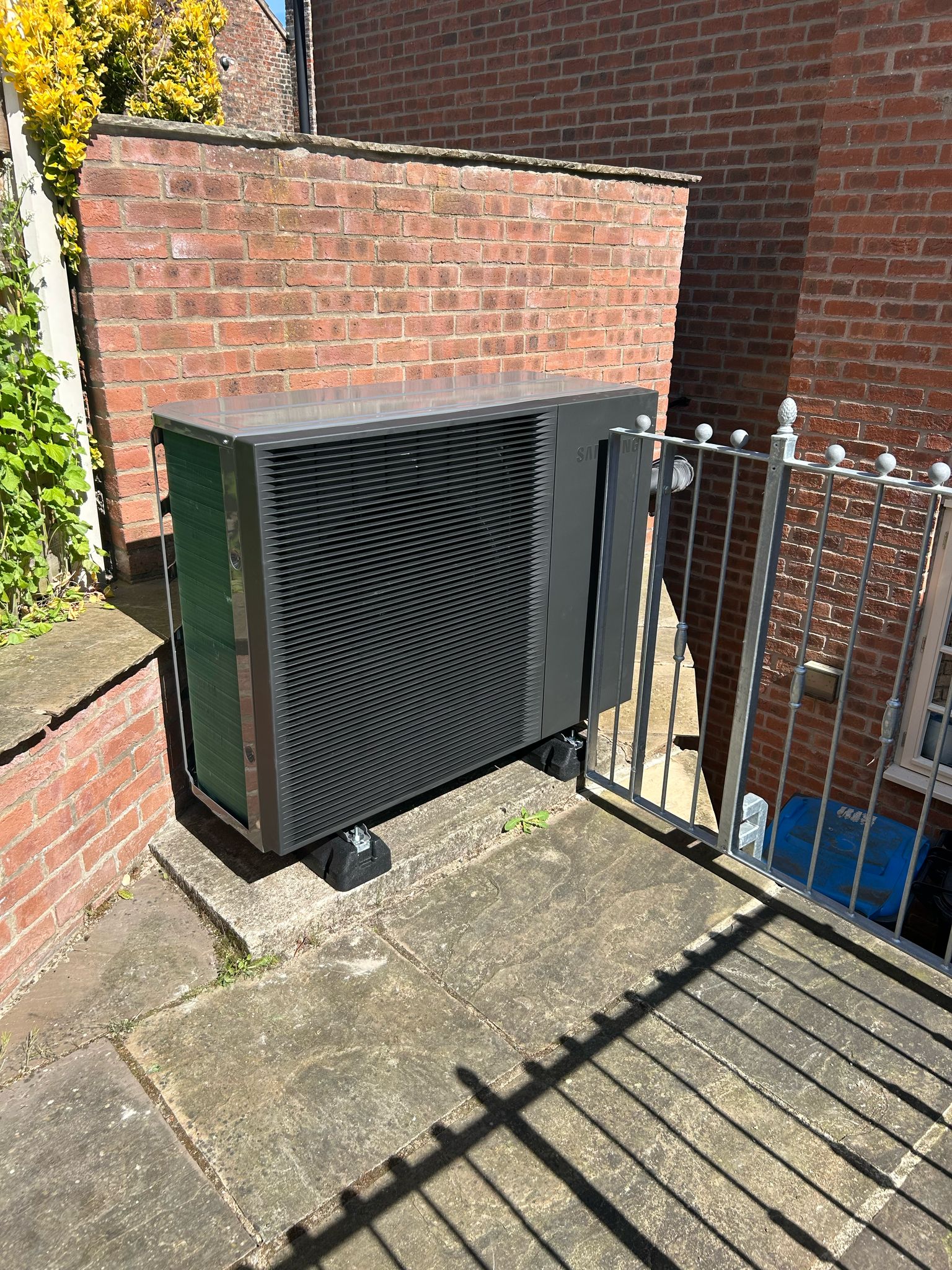
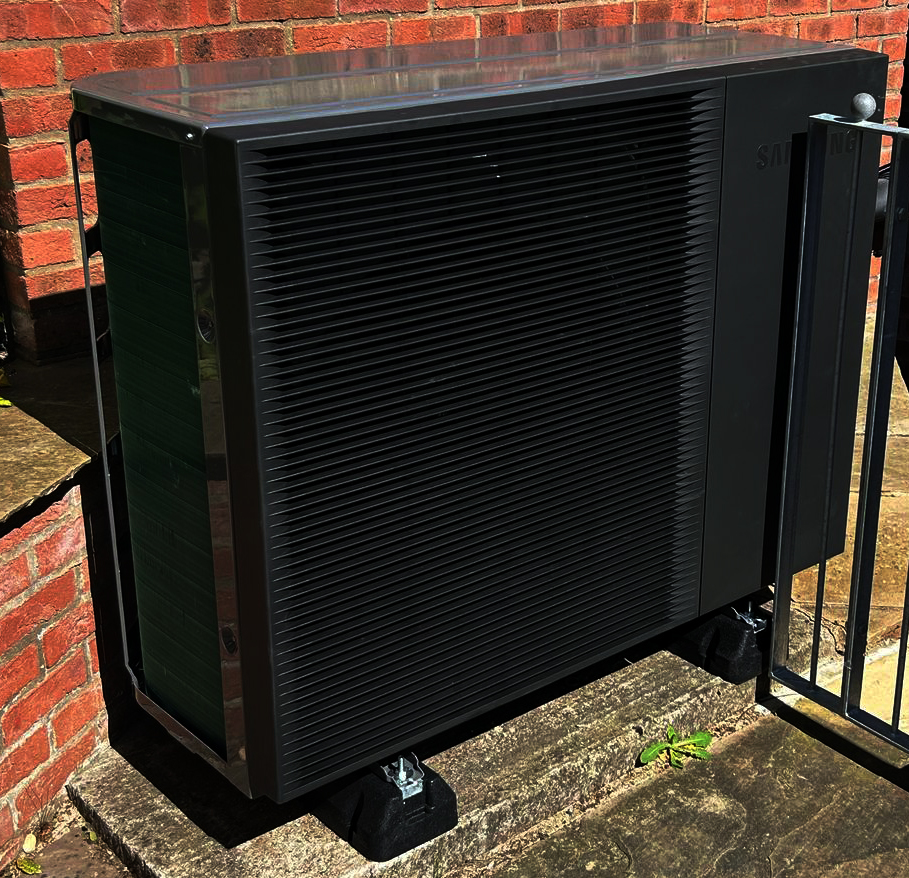
ASHPs Are Noisy and Disruptive
Is your fridge ‘noisy and disruptive’?
Because that’s how noisy you average ASHP is.
In the past ASHPs may have been a little noisier than thy are are today, but they still made no more noise than the average air conditioning unit.
The fan on your air source heat pump will function at approximately 40 to 60 decibels – as a comparison, a quiet library is around 40 dB, a refrigerator hums at 40-50 dB, and moderate rainfall is just 50 dB.
So, we don’t think the noise from your ASHP is going to bother you much.
They Only Work in New Builds
We would like to draw your attention to grade 1 listed 17th Century church, St Andrew by the Wardrobe in London.In 2023 they upgraded their inefficient central heating system with a series of air source heat pumps.
Since then the congregation have been toasty and warm even in the depth of winter.
So, if a 17th Century church can thrive using air source heat pumps, we think most UK homes will be OK.
Obviously, new builds are constructed to comply with modern EPC rating regulation, so they are perfect for ASHPs – but that doesn’t mean older house can’t reach those regulations.
Radiators Won’t Work with Heat Pumps
If they work with a standard combi-boiler, they will work with an ASHP.
They way this rumour got started is because ASHP work best with radiators with a large surface area.
ASHPs produce lower water temperatures, so they need a large radiator to ensure they heat is used efficiently.
Most homes have perfectly suitable radiators, though you may need to change one or two if your system was fitted a fair while ago.
Maintenance Is a Nightmare
Maintaining an air source heat pump is no different to maintaining a standard combi boiler.
In fact may modern ASHPs have building maintenance features that mean you have to do slightly less monitoring and maintenance.
The fan is one of the few moving parts that you need to service but the rest of it is all pressure and sensors.
They’re Not Really Eco-Friendly
They absolutely are!
This myth has got legs because there are some stats that make this seem true.
ASHPs are between 300 and 400% efficient – meaning every kW of electricity you put in them will result in between 3 and 4kWs of heat being produced.
A gas boiler is less that 40% efficient but gas is 3 times cheaper than electricity – so they actually work out the same to run.
The myth is based on electricity being produced, via the grid, using fossil fuels.
But, as the grid was 44% green energy in 2025, this just isn’t true anymore.
Won’t Have Enough Hot Water
This one is actually very common, and very understandable, because no one ever talks about ASHPs as being able to heat your hot water – but they can!
They don’t work like Combi-boilers though, they work like an immersion heater.
They heat water in a tank, and you can use it in the home whenever you like.
This does mean you can’t have endless showers or have every tap in the house on the go at once, but that ius very wasteful and expensive anyway.