Will DNOs stop Ed Miliband’s Rooftop Revolution? (Updated)
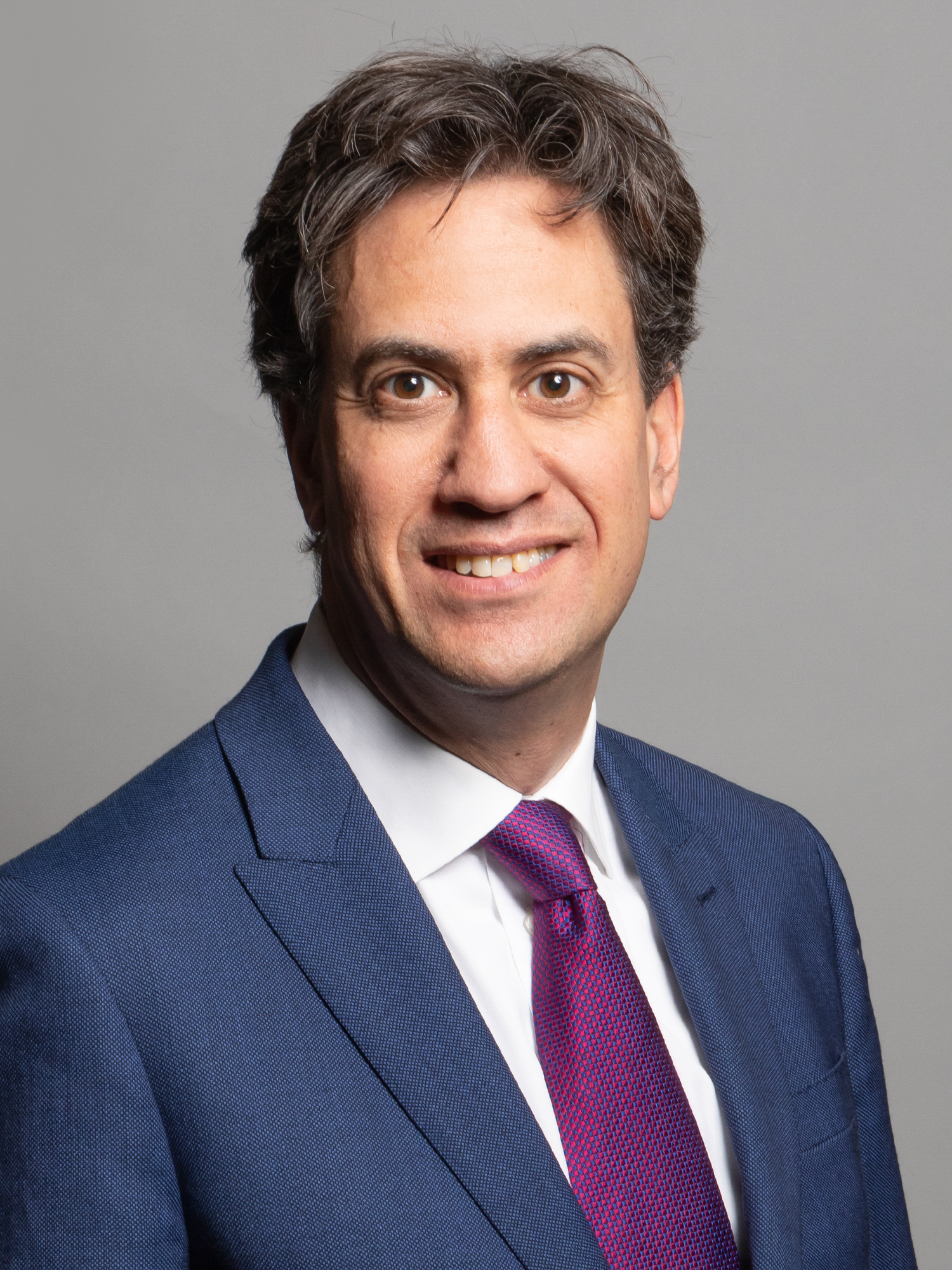
When Labour stormed to victory in the 2024 general election local Doncaster North MP, Ed Miliband was handed his dream job as Secretary of State for Energy Security and Net Zero.
What Is Miliband’s Rooftop Revolution and Why It Matters
His department immediately set about brainstorming ideas that would eventually become the new Warm Homes Plan – a series of grants and loans designed to help UK homeowners make the transition to green energy.
Part of Mr Miliband’s Warm Homes Plan hinges on those homeowners installing solar panels on their houses.
This is the government’s vision for a more sustainable, energy independent future for all of us.
Why does it matter?
Well, that depends on who you ask!
Certain heads of government think climate change is scam, and they are backed up by some journalists and newspapers.
However, if we follow the scientists, 99% of them theorise that we need to reduce our fossil fuel usage and move to renewable energy production.
We feel this is the most sensible approach - even if climate change wasn’t a fact, reducing pollution can’t be a bad thing, can it?
Problem is, we all know the change we have to make is pretty monumental.
It’s not just buying a couple of Bags for Life and making sure you get your recycling right.
It’s about a global shift away from fossil fuels and that means for heating, travel and power generation.
While the Warm Homes Plan isn’t a silver bullet, it will help 1000s of homes switch to renewables and gain a little energy independence.
Grid Constraints, Connections, and the Real Bottleneck
But there may be a few flies in Ed’s ointment, not least in the shape of the UK’s grid providers.
Grid providers look after the UK energy infrastructure, the pylons, the cables and the overall distribution of electricity.
The energy suppliers buy electricity from the grid and then sell it on to you.
To illustrate the way it works here are a few names you’ll recognise.
Grid providers/DNOs
- Electricity North West (North West England)
- Northern Powergrid (North East, Yorkshire, and Northern Lincolnshire)
- Scottish and Southern Electricity Networks (SSEN) (Central Southern England and North/Central Scotland)
- SP Energy Networks (Central & Southern Scotland, Merseyside, Cheshire, North Wales & North Shropshire)
- UK Power Networks (London, South East, and East of England)
- Western Power Distribution (Now part of National Grid, covering Midlands, South West, and South Wales)
Biggest UK Energy Utility Suppliers:
· Octopus
· British Gas
· OVO Energy
· E.ON Next
· EDF Energy
· Scottish Power
When a household wishes to install a solar energy system to produce their own electricity, they must inform the grid provider and ask for permission to feed that electricity into the grid.
When you have a system that is limited to 3.6 kWh, which would include 8 – 10 solar panels, you can apply for a G98 DNO certificate that will be automatically approved.
So far, so good….
However, if your system is above 3.6 kWh, like 60 – 70% of UK installations, you must apply for a G99 DNO certificate, and that’s when the fun starts.
We asked Jenny Brown, our Compliance Director, to explain what the problem is.
‘The industry has been experiencing severe delays when applying for G99s for years’ Jenny said ‘We can wait up to 3 months for the grid providers to get back to us, and that has started to effect our bottom line’
‘Customers are struggling to understand why they have to wait up to 12 weeks before they can have their systems installed, and they often decide to just cancel their order’
‘On top of that’ Jenny continued ‘We are now seeing a lot more G99 applications coming with either restricted outputs or an outright denial of permission.’
‘In the last 3 months alone we have lost over £100,000 in cancelled orders due to DNO problems, and that’s a big hit for a local company to take.’
The Power Problem: Why DNOs Are Nervous About Rooftop Solar
UK Energi have already reached out to Mr Miliband to see if we can work with him and his team to make the transition to green energy a less frustrating process.
The main problems are twofold:
1. The grid infrastructure is ill-equipped to handle the new move towards green energy.
2. The grid providers have no incentive to employ staff to regulate the DNO certification.
These problems need to be dealt with as quickly and as painlessly as possible.
Understandably, the infrastructure is an ongoing problem, but one we can see being dealt with as new storage systems and distribution networks come online.
The problems with staffing, or willing, at grid providers is quite another matter.
Are DNOs Blocking Progress or Just Playing Catch-Up?
Depends who you ask really.
There’s no doubt that the DNOs were taking a bit by surprise by the sudden popularity of solar from 2020 onward.
That said, that was 6 years ago so they should have got their houses in order by now.
Which brings us to the conclusion that they are dragging their heels on purpose.
Home based power stations are certainly a help to our national grid, especially when battery storage is utilised during peak times.
But as homeowners can sell their excess energy directly to the suppliers, that means the grid providers are missing out on some profit.
Obviously, we are just speculating, but we can't see any reason the grid providers would go out of their way, or spend money on more staff, to remove their ability to sell energy.
What Has to Change for the Rooftop Revolution to Succeed
Attitudes mainly .... though we think the massive energy price hikes in the early 2020s has certainly got that ball rolling.
And, while attitudes to renewable energy are changing on a domestic and personal level, it’s infrastructure and big business that are taking much longer.
This may not be for any nefarious reasons, but simply because the changes that need making are so monumental.
There is no doubt that money needs to be spent on this problem, and those numbers can soon start to rack up, so we need to look at a global solution everyone can get on board with.
Any ideas?
UPDATED!
It seems Mr Miliband and his team do have some ideas.
Our MD, Chris Delaney, wrote to the Secretary of State for Energy Security and Net Zero to articulate his concerns over the G98/G99.
And, Ed came back with a very comprehensive answer that laid out how Ofgem, and other departments, are dealing with this problem
Mr Miliband said:
'I am aware of the issues you describe and agree that they present an obstacle to our mission towards Clean Power 2030 and the decarbonisation of our electricity system. Ofgem is conducting a review of the connections obligations and incentives it places on network companies to help ensure timely delivery of connections and high levels of customer service. This includes the G99 process you describe. The consultation can be found here.
See theme 6 of the consultation: ‘DECISION 6.5. We plan to require all DNOs to review their current G98 limits, with the view to raise them above the current national recommendation of 3.68kW. We will consider G99 and G100 processes and policies for microgeneration in parallel.'
This is all excellent news to us - and to everyone who wants to fit domestic solar!